
Architecture of Experience
The second time is harder. The space is the same, the client knows what to expect, and the guests remember last year. The brief was to return to Nowy Teatr and make it feel like somewhere else entirely.
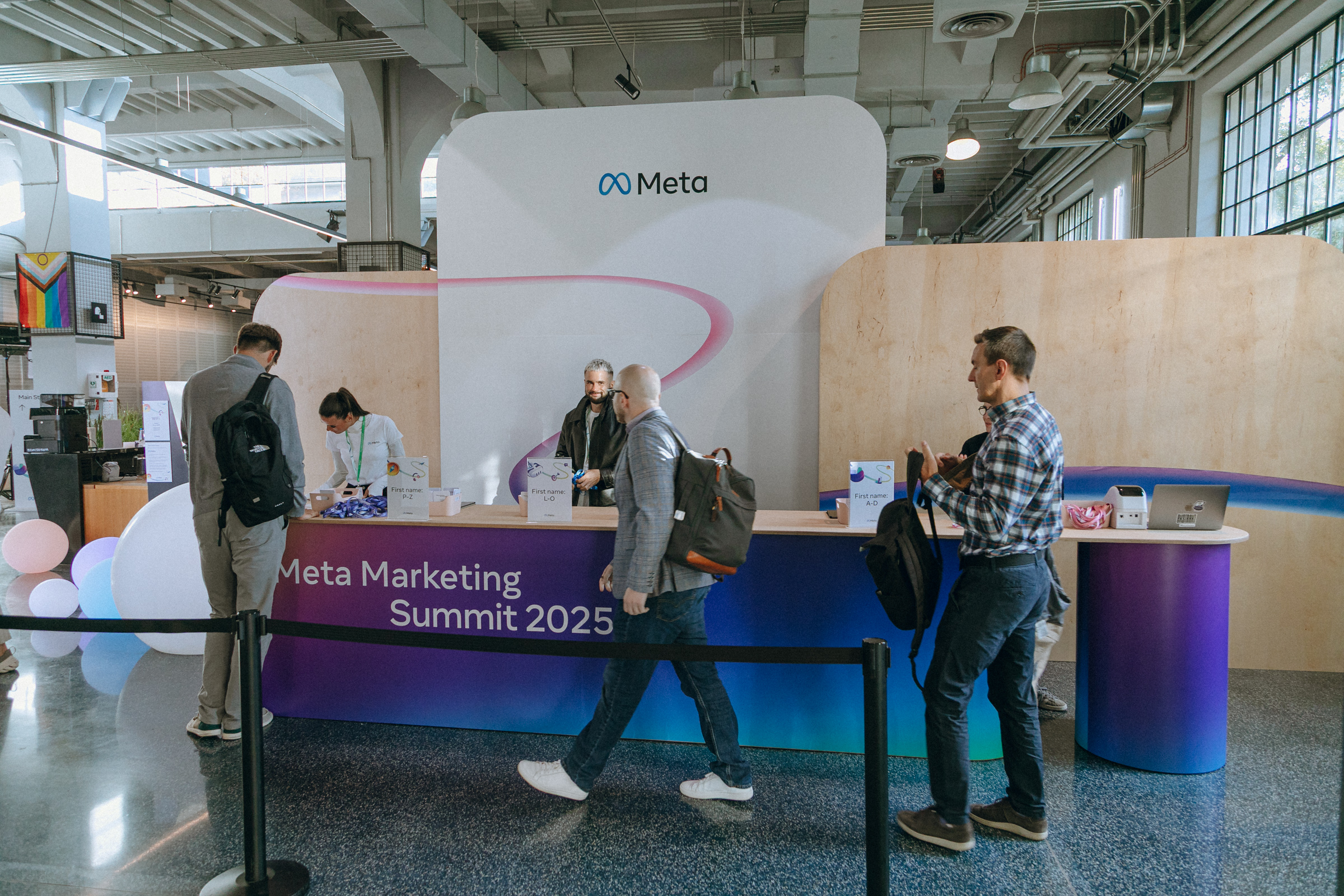
There's a particular kind of creative pressure that comes with repetition. First editions are forgiven their rough edges – they're firsts. Second editions are held to a higher standard, measured against memory. The question hanging over every decision in this project was the same: will someone who was here last year feel anything new?
The venue itself added another layer of difficulty. Nowy Teatr is a distinctive, architecturally strong space – the kind of place that resists being overwhelmed. Branding it would have been easy. Transforming it was something else.

We didn't want to dress the theatre. We wanted to replace it.
The concept we built the entire project around was simple in principle and demanding in execution: for one day, Nowy Teatr would stop being a theatre. No trace of the existing architecture's identity would compete with what Meta brought into it. Guests would arrive to find a world that had been entirely rebuilt around a single brand logic – not decorated, but designed from the ground up.
This required building three distinct activation zones – Reels, Ray-Ban Meta, and Meta AI – each with its own visual personality, but all operating within a shared design grammar. The discipline of that balance – individual character without fragmentation – is where the bulk of the creative work lived.
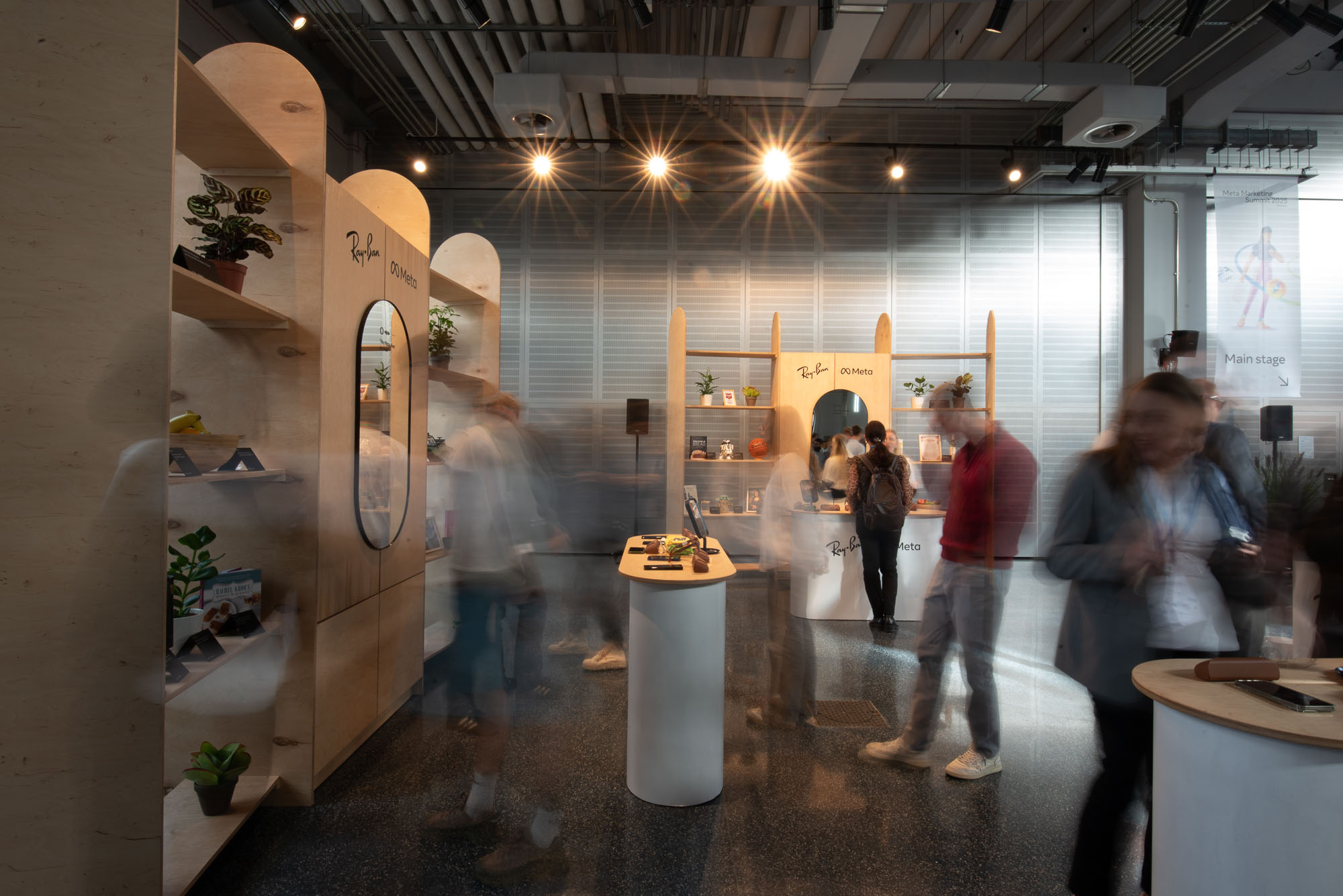
Ekstrakt held the full end-to-end scope: stage scenography, wayfinding, zone design, and all pre- and post-event communication materials. That breadth of ownership matters, because consistency at this level isn't a visual decision – it's an operational one. It breaks down the moment different teams control different touchpoints.
Two elements of the execution are worth singling out.
The first was the use of AI as a dramaturgical tool, not a feature. Each of the 20 speakers walked onto the main stage to a unique, AI-generated musical track – composed to their personality and their session's topic. The effect was subtle and deliberate: a moment of personalisation that most of the audience wouldn't consciously register, but that changed the texture of each entrance. That's the right way to deploy technology at an event. Not announced. Just felt.
The second was the Meta AI Corner – an activation space where participants didn't simply demo technology but left with something physical. Every guest walked away with a personalised, printed poster: a tangible object that extended the digital experience beyond the room. In an era of ephemeral brand moments, that matters.
The scale of consistency we maintained – from the monumental stage structures down to the lanyards and the C-suite dinner design – is what ultimately held the world together. These details aren't decoration. They're the thing that tells a returning guest, before they've consciously processed anything, that this year is different.

The Meta EMEA team called MMS Warsaw 2025 the most ambitious and coherent edition in the history of the Warsaw programme. That assessment came not from any single spectacular element, but from the cumulative effect of a design that held its logic across every surface, every zone, every moment of the guest journey.
The activation zones ran at high engagement throughout the day. Guests moved through the space the way well-designed environments invite people to move – with curiosity, without friction. The architecture of experience, to use the term we'd built the concept around, turned out to be exactly that: not aesthetic, but functional. Design as a tool for orientation, immersion, and brand conviction.
For Ekstrakt, delivering this project for the second consecutive year is the kind of outcome that speaks clearly. When a client returns, the work did its job.
Creative Experience Studio.
